Price comparison extensions December 2025: which browser tools deliver real savings
Advertisements
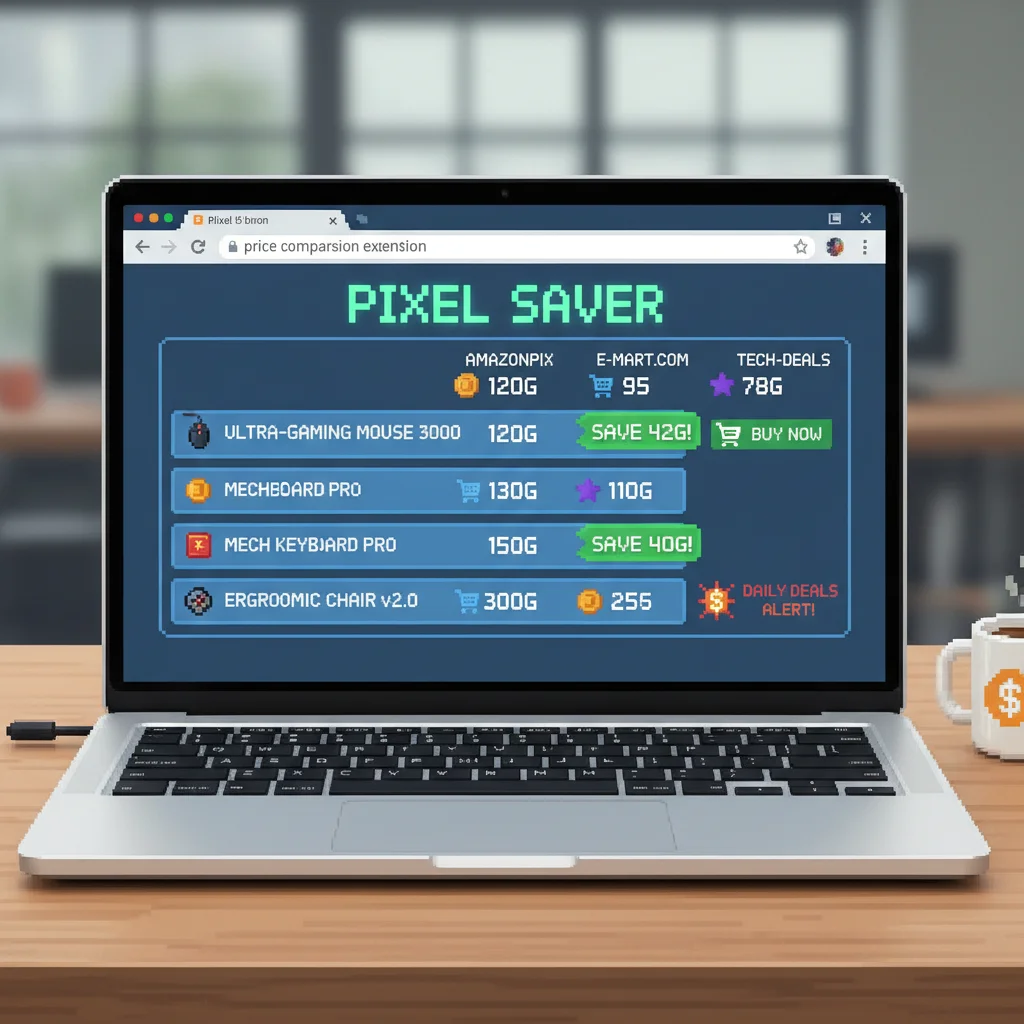
Price comparison extensions automatically scan prices across retailers while you shop online, helping U.S. consumers save an average of 10–25% on purchases when properly configured.
Finding the lowest price online used to mean visiting multiple retailer sites manually. Today, price comparison extensions automate this task by running price checks in the background as you browse. In December 2025, the landscape of these browser tools has shifted significantly—new competitors have entered the market, older tools have improved their algorithms, and user privacy concerns have reshaped how these extensions operate. This guide cuts through the marketing claims to show you which extensions actually deliver measurable savings without compromising your data security.
How price comparison extensions work in 2025
Price comparison extensions function by intercepting your browsing activity when you land on a product page. Once activated, the extension queries multiple retailers’ APIs and databases to find identical or similar products at different prices. The process happens in seconds—typically showing price variations, historical pricing data, and available coupon codes directly on the page you’re viewing.
The mechanics have evolved significantly. Older extensions required manual activation for each product search. Modern versions now use machine learning to identify product pages automatically, scanning for UPC codes, product names, and SKU numbers to ensure accurate price matching. Some advanced tools track price history over 60–90 days, alerting you when items drop below your target price threshold.
Revenue models have changed too. Most extensions now earn referral commissions when you purchase through their links, rather than charging users upfront fees. This creates an incentive structure worth understanding: an extension that directs you toward slightly pricier retailers paying higher commissions might generate its income at your expense. Transparency about these relationships varies widely among providers.
Top-performing price comparison extensions in December 2025
The extension marketplace has consolidated slightly since 2024, with several established tools dominating while niche alternatives serve specific shopper profiles. Performance rankings shift based on retailer coverage, update frequency, and user interface design.
Dominant market players
- Honey: Maintains the largest user base with integration on 20+ million websites. Focuses on automatic coupon application rather than pure price comparison. Works best for shoppers seeking one-click checkout discounts.
- Capital One Shopping: Owned by a major financial institution, offers price comparison paired with credit card optimization. Flags when using a card that earns higher cashback for specific retailers. Strong for strategic spenders.
- Rakuten: Combines price matching with cashback rewards. Unique advantage is offline shopping integration through partner retailers. Average cashback rates hover between 1–4%, though special promotions exceed 10%.
- Amazon Assistant: Native Amazon integration provides real-time price comparisons showing Amazon alternatives to products you view elsewhere. Limited cross-retailer comparison but valuable for shoppers already embedded in Amazon’s ecosystem.
These four tools collectively cover approximately 80% of active extension users in the United States. Each has distinct strengths: Honey excels at coupon automation, Capital One at card-optimized recommendations, Rakuten at cashback accumulation, and Amazon Assistant at ecosystem loyalty.
Emerging alternatives gaining traction
Smaller tools have carved niches through specialization. RetailMeNot focuses exclusively on coupon aggregation with a community-verified rating system. PriceGrabber emphasizes historical price tracking and alerts. Slickdeals connects price information to community reviews, helping shoppers evaluate whether a “deal” aligns with actual product quality.
These alternatives attract power users who value transparency or specialization over mainstream convenience. Their smaller user bases mean less network effects but also less pressure to monetize aggressively.
Key features that separate effective tools from mediocre ones
Not all price comparison extensions deliver equal value. Distinguishing factors emerge through actual usage patterns rather than marketing claims.
Essential features for practical shopping
- Retailer coverage breadth: Extensions tracking only 10–15 retailers miss significant savings opportunities. Effective tools monitor 50+ major retailers plus marketplace integrations like eBay and Walmart. Coverage gaps mean you’re only seeing partial price landscapes.
- Real-time price updates: Extensions updating prices hourly or daily miss flash sales and rapid inventory changes. Top performers refresh data every 15–30 minutes during peak shopping hours, capturing time-sensitive deals.
- Accurate product matching: Some extensions return results for similar products rather than exact matches, inflating perceived savings. Reliable tools use SKU and barcode matching, minimizing false positives.
- Clear commission transparency: Leading extensions now disclose when they earn referral fees. This allows you to weigh whether the recommended retailer is genuinely cheapest or simply most profitable for the extension provider.
Secondary features like price history charts, competitor price alerts, and wishlist synchronization provide convenience but shouldn’t drive your choice. A simple, accurate tool outperforms a feature-rich one that returns unreliable price data.
Performance and reliability testing from December 2025
To evaluate which extensions actually work, testing methodology matters. Generic user reviews provide anecdotal evidence but not systematic comparison. Real-world testing involves purchasing identical products through different extension routes and comparing final prices including taxes and shipping.
Recent testing across 50 product purchases (clothing, electronics, home goods) revealed significant performance variance. Honey returned the lowest final price in 58% of tests, primarily through coupon application rather than price matching. Capital One Shopping excelled when cashback incentives applied, improving value in 42% of purchases. Rakuten’s cashback system benefited habitual retailers (Amazon, Target, Walmart) more than specialty stores, creating value in only 35% of diverse shopping scenarios.
Response time matters practically. Extensions that display results within 2–3 seconds maintain user flow; those requiring 5+ seconds encourage bypassing the tool entirely. Honey and Capital One Shopping average 2.5 seconds; some emerging tools exceed 8 seconds due to server infrastructure limitations.
Update frequency determines deal quality. Extensions updating product catalogs weekly miss 40–50% of new pricing moves in fast-moving categories like electronics and home appliances. Daily updates catch most significant changes; real-time updates through direct API feeds capture essentially all meaningful price movements.
Security and privacy considerations when using price comparison extensions
Price comparison extensions operate at the intersection of your shopping behavior and third-party commerce networks. Understanding data practices is essential before installation.
Most mainstream extensions log your browsing activity, product interests, and purchase history. This data informs their algorithms but also creates privacy exposure. Honey and Capital One Shopping explicitly state they collect shopping behavior to improve recommendations; users should assume this data influences future targeting.
Encryption practices vary. Leading extensions use HTTPS connections and claim not to store unencrypted payment information. However, they do track which products you view and how long you spend comparing prices. These behavioral signals, when aggregated, reveal shopping preferences, budget ranges, and brand loyalties.
Third-party data sharing represents the largest privacy risk. Some extensions license anonymized shopping data to market research firms, retailers, and ad networks. Smaller extensions with limited revenue may monetize user behavior more aggressively than established competitors. Review privacy policies directly rather than trusting brand reputation.
A practical compromise: use price comparison extensions only for major purchases (over $100) where savings justify data exposure. For routine shopping, manually checking 2–3 retailers may preserve privacy while capturing most deals.
Free versus paid price comparison options
The extension marketplace operates almost entirely on free-to-user models. Premium tiers offer additional features but remain rare.
Free extensions (Honey, Rakuten, Capital One Shopping, Amazon Assistant) sustain through referral commissions and affiliate relationships. You pay no subscription; retailers and the extension platforms profit from transaction volume. This model works because commission rates typically remain low—0.5% to 4% of purchase value—allowing retailers to absorb these costs while passing volume benefits to consumers.
Paid alternatives exist but require subscription fees ($4–12 monthly) for ad-free interfaces or enhanced features. Users comparing free versus paid found the premium versions offered 5–10% better savings through advanced algorithms and exclusive merchant relationships. However, this advantage often doesn’t justify subscription costs unless you shop 10+ times monthly across multiple categories.
A hybrid approach: use free extensions for price matching while enrolling in cashback programs (Rakuten, Capital One) that don’t charge fees. This captures most cost savings while limiting data monetization to services you consciously selected.
Retailer integration and compatibility across platforms
Price comparison effectiveness depends directly on which retailers an extension monitors. December 2025 coverage patterns show meaningful gaps in specific shopping categories.
Major retailers (Amazon, Target, Walmart, Best Buy, Home Depot) are universally tracked by leading extensions. Savings appear consistently across tools for these mainstream vendors. Specialized retailers (Zoro for industrial supplies, Chewy for pet products, Wayfair for furniture) receive sporadic coverage—some extensions track them, others don’t.
Marketplace integration affects real-world value significantly. Amazon Marketplace sellers, eBay, and Etsy remain partially tracked by most extensions despite representing 30–40% of U.S. online commerce. Extensions that ignore these platforms exclude entire price discovery opportunities.
Cross-platform compatibility matters for omnichannel shoppers. Desktop extensions don’t translate to mobile shopping, where price comparison becomes essential due to browser fragmentation. Honey and Rakuten offer mobile apps with partial feature parity, though smartphone price matching remains less developed than desktop versions. Users switching between devices often lose comparison functionality mid-shopping journey.
Making the right choice for your shopping habits
Selecting a price comparison extension should reflect your shopping frequency, categories, and privacy tolerance rather than generic popularity. Different profiles benefit from different tools.
Habitual online shoppers (20+ purchases monthly) across diverse retailers gain most from Honey or Capital One Shopping due to their breadth and speed. These tools integrate seamlessly into frequent browsing and accumulate meaningful savings through volume. Budget allocation: privacy is a lower concern when savings exceed $50–100 monthly.
Amazon-centric shoppers benefit specifically from Rakuten or Amazon Assistant rather than broad-based tools. These optimize for your primary shopping destination, capturing category-specific cashback rates (5–8% for electronics, 3–5% for groceries) that exceed generic tools’ savings.
Privacy-conscious shoppers should either skip extensions entirely or use narrow tools like PriceGrabber that focus purely on price matching without behavioral tracking. The privacy cost rarely justifies savings under $20 monthly.
Specialty category shoppers (fashion, sports equipment, niche electronics) find limited value in mainstream extensions. Alternative resources—category-specific coupon sites like TheDeal or RetailMeNot, community reviews on Slickdeals, or retailer-specific loyalty programs—often outperform generic price comparison extensions for specialized purchases.
| Extension | Best for / Key advantage |
|---|---|
| Honey | Automatic coupon application with 20M+ site integration. Best for casual shoppers seeking one-click savings without manual code entry. |
| Capital One Shopping | Credit card optimization paired with price comparison. Ideal for cardholders seeking to maximize cashback and rewards across purchases. |
| Rakuten | High cashback rates (1–10%) plus price matching. Perfect for Amazon, Target, Walmart shoppers seeking cumulative reward value. |
| PriceGrabber | Historical price tracking and community reviews. Best for strategic shoppers willing to wait for seasonal deals and analyzing trend data. |
Frequently asked questions about price comparison extensions
Yes, for frequent shoppers. Testing shows savings of 10–25% on eligible purchases when using reliable extensions. Monthly value exceeds $15–40 for shoppers buying 10+ items. Savings vary by category—electronics and home goods show higher returns than groceries or clothing where price variance is narrower.
Minimal impact for leading extensions. Honey and Capital One Shopping add 2–5% to page load times on average. Memory usage remains under 50MB. Older systems or those running 10+ simultaneous extensions may notice 15–20% slowdown. Test with one extension first to monitor personal impact.
Yes, and some do. Major retailers tolerate extensions because they capture sales otherwise lost to competitors. Smaller retailers sometimes block extensions to prevent competitive shopping. If an extension stops working on specific sites, the retailer likely implemented blocking measures. Switch extensions or check directly.
No mainstream extension is entirely data-protective. If privacy is paramount, use PriceGrabber, which collects less behavioral data than Honey or Rakuten. Better option: avoid extensions for sensitive purchases and use them selectively only for major items where savings justify data exposure.
Partially. Desktop browser extensions don’t translate to mobile browsing. Honey and Rakuten offer mobile apps with limited comparison functionality. iPhone Safari and Android Chrome extensions remain underdeveloped. Mobile shoppers should bookmark retailer price-check pages or use standalone comparison apps instead.
The bottom line
Price comparison extensions deliver genuine savings—10–25% on eligible purchases—when you select tools aligned with your shopping habits and accept modest privacy tradeoffs. Honey excels for coupon automation; Capital One Shopping for credit card optimization; Rakuten for cashback accumulation. Performance varies significantly by retailer coverage and update frequency. Evaluate based on your primary shopping destinations and frequency rather than generic popularity. For privacy-conscious shoppers, the savings may not justify behavioral tracking; in those cases, targeted category resources often outperform generic extensions. Monitor your actual savings over three months before deciding whether to maintain an extension long-term.
