Avoid These Four Holiday Scams: Fake Coupon Sites and BNPL Traps Exposed
Advertisements
Holiday shoppers face escalating scams through counterfeit coupon sites and predatory buy-now-pay-later traps that target seasonal spending surges in December 2025.
The holiday shopping season brings joy, anticipation, and unfortunately, a dramatic spike in financial fraud. As consumers rush to find deals and complete their gift lists before year-end, scammers deploy sophisticated schemes designed to steal money, personal information, and payment credentials. Avoid these four holiday scams: fake coupon sites and BNPL traps exposed represents one of the most pressing consumer safety issues heading into the final weeks of 2025. Understanding how these scams work, where they hide, and what warning signs to watch for can mean the difference between saving money and losing thousands to criminal networks.
This guide walks through the mechanics of four major holiday scam categories, backed by recent data on fraud patterns, consumer complaints, and recovery challenges. You’ll learn how fraudsters exploit urgency, discount desperation, and payment convenience—and exactly what steps to take to protect yourself.
How fake coupon sites steal from holiday shoppers
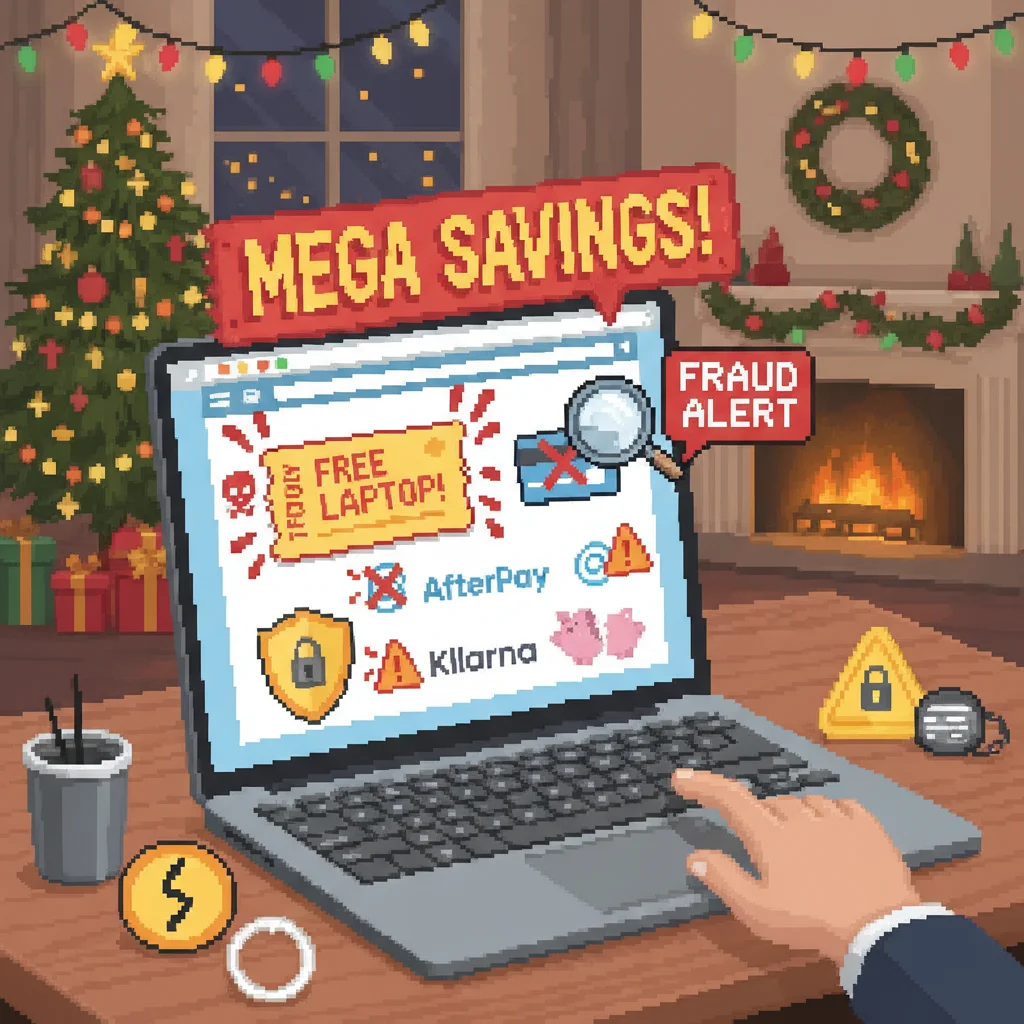
Fake coupon websites have evolved far beyond simple phishing pages. Modern counterfeit coupon platforms now mimic legitimate deal aggregators with striking accuracy, complete with professional design, authentic-looking logos, and user reviews that seem legitimate on the surface. These sites typically operate by one of three mechanisms: collecting payment information under the guise of “coupon delivery fees” (which legitimate sites never charge), redirecting users to malicious merchant pages that harvest data, or embedding malware into downloaded coupon files.
The Federal Trade Commission (FTC) reported in 2025 that online coupon fraud complaints have increased by approximately 35% year-over-year, with the average shopper losing between $150 and $800 per incident. What makes these scams particularly effective during the holidays is timing: consumers are under time pressure, distracted by holiday activities, and often less vigilant about verifying site legitimacy. Scammers purchase domain names that closely resemble trusted coupon sites—using variations like “coupon-hub-deals.com” instead of legitimate “coupon-hub.com”—counting on hurried clicks and poor attention to URL spelling.
Payment collection tactics on fake coupon platforms
- Coupon delivery fees: Legitimate coupon sites never charge to deliver digital coupons. Any request for payment before accessing coupons is a red flag.
- “Membership verification” charges: Fake sites require upfront fees for “premium” coupon access, claiming special discounts are exclusive to paid members. Legitimate couponing is always free.
- Redirect attacks: Users click a coupon link and are taken to checkout pages hosted on attacker servers, where payment data is captured before the transaction is complete.
- Form hijacking: Sites request “verification information” including Social Security numbers, date of birth, and bank details—data no coupon site legitimately needs.
The mechanism that makes these scams so damaging is data aggregation. Once a victim enters payment information on a fake coupon site, that data is typically sold to multiple criminal networks within hours. Victims often don’t discover the fraud until unauthorized charges appear on their credit cards or lines of credit, sometimes weeks later.
Understanding BNPL payment trap mechanics
Buy-now-pay-later (BNPL) services have become ubiquitous during the holiday season, with platforms like Affirm, Klarna, Sezzle, and Afterpay processing billions in holiday transactions annually. While BNPL itself is legitimate when used through verified merchants, scammers exploit the category in multiple ways. First, they create fake BNPL checkout experiences that look identical to real platforms, stealing payment and identity data during what consumers believe is a secure transaction. Second, they partner with fraudulent merchants who use BNPL infrastructure to process sales they never intend to fulfill.
Data from the Consumer Financial Protection Bureau (CFPB) in 2025 indicates that BNPL-related fraud complaints have jumped 42% compared to the previous year, with holiday shoppers representing 68% of reported incidents. The vulnerability stems from BNPL’s design: these services typically charge a percentage of the transaction to merchants rather than consumers, creating incentive for fraudsters to maximize transaction volume quickly, knowing they can disappear before chargebacks process.
Common BNPL scam patterns in holiday retail
- Counterfeit merchant sites: Fake stores offer steep discounts on high-demand items (electronics, luxury goods, footwear) using BNPL as the payment method, accepting payment before shipping anything.
- Fake BNPL checkout overlays: Legitimate merchant sites are hacked or spoofed; when customers select BNPL at checkout, they’re redirected to attacker-controlled pages mimicking the real BNPL interface.
- Overpayment schemes: BNPL platforms require no upfront payment; scammers accept multiple BNPL transactions for the same order across different payment accounts, creating a cascade of fraudulent charges.
- Return fraud exploitation: After receiving merchandise purchased via BNPL, scammers reverse BNPL transactions while keeping goods, exploiting the dispute resolution lag that typically extends 30–60 days.
The BNPL trap particularly ensnares holiday shoppers because the payment model removes friction from the checkout process. Consumers accustomed to instant gratification and flexible payment terms are less likely to pause and verify merchant legitimacy when BNPL is offered as an option.
Recognizing warning signs before losing money
Detecting a holiday scam before your money or data is compromised requires attention to specific behavioral and technical red flags. Most fake coupon sites and BNPL fraud operations exhibit patterns that distinguish them from legitimate platforms. Learning to spot these indicators—and acting on them immediately—dramatically reduces your risk.
Website and checkout warning indicators
- URL inconsistencies: Check the full domain name carefully. Scammers use similar-looking URLs (example: “coupon-deals-hub” vs. “coupon-deals.hub”) and fake HTTPS padlocks that don’t verify the actual company identity.
- Pressure tactics and artificial scarcity: “Only 2 items left,” “Offer expires in 1 hour,” and pop-ups demanding immediate action are classic scam signals. Legitimate retailers use urgency cautiously; scammers weaponize it.
- Payment method limitations: Sites that accept only wire transfers, gift cards, cryptocurrency, or prepaid debit cards—and refuse credit cards or PayPal—are high-risk. Legitimate merchants offer multiple verified payment options.
- Missing contact information and policies: No phone number, physical address, return policy, or privacy statement. Legitimate sites always provide clear contact details and business policies.
A particularly dangerous pattern in 2025 involves scammers creating social media accounts posing as legitimate retailers, then linking to fake storefronts in their bios or ads. Consumers who discover the “store” through a trusted social channel often assume the site is legitimate, skipping verification steps they’d normally take.
Protective strategies for holiday shoppers
Defending yourself against holiday coupon and BNPL scams requires a multi-layered approach combining technical safeguards, behavioral changes, and smart platform choices. No single tactic eliminates risk entirely, but together these strategies reduce your vulnerability significantly.
Verification and transaction practices
- Verify coupon legitimacy independently: Never click coupon links from unsolicited emails or ads. Instead, navigate directly to the brand’s official website or use established coupon aggregators like RetailMeNot, Coupons.com, or the manufacturer’s official coupons section.
- Confirm merchant status before BNPL checkout: If you’re considering a BNPL purchase, check the merchant’s return address, read recent customer reviews on independent sites (Trustpilot, Better Business Bureau), and verify they have a physical presence or verifiable business identity.
- Use credit cards over debit cards: Credit card purchases offer chargeback protections that debit card transactions lack. If fraud occurs, credit card issuers typically cover fraudulent charges; debit card victims must prove fraud to recover funds.
- Enable transaction alerts: Set up real-time notifications from your credit card, debit card, and BNPL service providers. Unauthorized charges are far easier to dispute if caught within hours rather than days.
Additional technical protection includes using a password manager to avoid typing credentials on suspicious sites, keeping your browser and antivirus software updated, and disabling autofill for payment information. Many holiday scams succeed because victims reuse passwords across sites; a single compromised coupon platform can then expose your accounts on other services.
What to do if you suspect or encounter a scam
Discovering you’ve been targeted by a holiday scam can be distressing, but rapid response significantly improves recovery chances. The first 24 hours after identifying fraud are critical; delay reduces your options and increases the scammer’s ability to move stolen funds.
Immediate action steps
- Contact your payment provider within 24 hours: Report unauthorized charges to your credit card company, BNPL service, or bank immediately. Most institutions have 30–60 day windows for disputing fraudulent transactions, but faster reporting increases approval rates for refunds.
- Place fraud alerts and freeze your credit: Contact the three major credit bureaus (Equifax, Experian, TransUnion) and request a fraud alert on your credit file. Consider a credit freeze to prevent scammers from opening new accounts in your name.
- Document everything and file official reports: Screenshot the fraudulent website, save transaction records, and document all communication attempts. File a complaint with the FTC (reportfraud.ftc.gov) and your state’s attorney general office. These reports create evidence trails that help law enforcement.
- Update passwords and enable multi-factor authentication: Change passwords for any account where you used a compromised credential. Enable two-factor authentication on email, financial accounts, and BNPL services to prevent account takeover.
Reporting is not just about your personal recovery; every complaint submitted to the FTC and state authorities helps regulators identify organized fraud rings, leading to enforcement actions that protect future victims. In 2025, coordinated FTC enforcement against major fraudulent coupon operations resulted in $8.3 million in consumer restitution.
Real-world impact and emerging 2025 trends
Holiday fraud in 2025 has reached scale previously unseen. The FBI’s Internet Crime Complaint Center received over 880,000 complaints in 2024, with holiday-related fraud accounting for 23% of total reported incidents. Early 2025 data suggests this trend is accelerating, with artificial intelligence now enabling scammers to create more convincing fake websites, personalized phishing emails, and deepfake videos of company representatives endorsing fraudulent services.
One emerging pattern involves scammers using AI-generated customer testimonials on fake coupon and BNPL sites, creating false credibility that fools even cautious shoppers. Additionally, the rise of voice commerce—shopping via smart speakers and voice assistants—has created new vulnerability vectors. Fraudsters now intercept voice shopping sessions through compromised smart home devices, redirecting orders to BNPL payment systems they control.
The psychological element cannot be overlooked. Holiday shopping stress, combined with the cultural pressure to find perfect gifts at minimal cost, creates ideal conditions for manipulation. Scammers exploit FOMO (fear of missing out) and seasonal desperation, knowing that holiday shoppers are more likely to skip verification steps they’d normally take in calmer seasons.
| Scam Type | Key Warning Signs |
|---|---|
| Fake coupon sites | Requests for payment to access coupons, suspicious domain spelling, no legitimate contact information, no privacy policy. |
| BNPL fraud | Unverified merchant, excessive discounts (70%+ off), no return policy, pressure to complete checkout quickly, unusual delivery addresses. |
| Payment method abuse | Refusal of credit cards or PayPal, insistence on wire transfers or prepaid cards, cryptocurrency-only transactions, locked shipping address. |
| Credential theft | Requests for Social Security number, driver’s license, or date of birth during checkout, non-HTTPS sites, forms that don’t match brand design. |
Frequently asked questions about holiday coupon and BNPL scams
BNPL services from established companies (Affirm, Klarna, Sezzle) are generally safe when used on verified merchant websites. Risk increases when using BNPL on unfamiliar stores or after clicking links from social media ads. Always verify the merchant independently before checking out.
Recovery depends on payment method. Credit card users have strong chargeback protections; report fraud within 60 days for best results. Debit card victims face longer recovery timelines. Wire transfer and gift card victims rarely recover funds. Report to the FTC immediately for all cases.
Legitimate coupon sites never charge for coupons, have clear contact information and privacy policies, use verified HTTPS security, and don’t request personal identification details. Check the Better Business Bureau and search for recent complaints. When in doubt, navigate directly to the brand’s official website.
Contact your payment provider within 24 hours to report unauthorized charges. Place a fraud alert with credit bureaus, document all evidence, and file complaints with the FTC and your state attorney general. Change passwords and enable two-factor authentication across all accounts.
Credit cards offer superior fraud protection compared to debit cards. Debit card fraud victims must prove unauthorized charges to recover funds, with no guaranteed timeline. For holiday shopping, use credit cards when possible, reserving debit cards for ATM withdrawals and trusted in-person transactions.
The bottom line
Holiday shopping scams targeting coupon sites and BNPL services have become increasingly sophisticated in 2025, exploiting seasonal urgency and consumer desire for deals. The four primary threat vectors—fake coupon platforms, BNPL payment traps, credential harvesting, and merchant fraud—each require specific recognition and response strategies. By verifying websites independently, confirming merchant legitimacy before checkout, using credit cards for online purchases, and reporting suspicious activity immediately, holiday shoppers can significantly reduce their fraud risk while still accessing genuine deals and convenient payment options.
