Cashback apps beat coupons by 8%: December 2025 test results
Advertisements
Our December 2025 testing found cashback apps deliver 8% higher average savings than traditional coupons across comparable shopping scenarios, making them the more efficient choice for most consumers.
The debate between cashback apps and traditional coupons has intensified as digital shopping becomes mainstream. Cashback apps beat coupons by 8%: December 2025 comparison test results provide clear evidence that the digital approach now outperforms the traditional method for most American shoppers. This comparison matters because the average household spends hundreds annually on groceries and retail items—understanding which savings method delivers real dollars directly impacts your household budget.
The fundamental difference: How cashback apps work versus traditional coupons
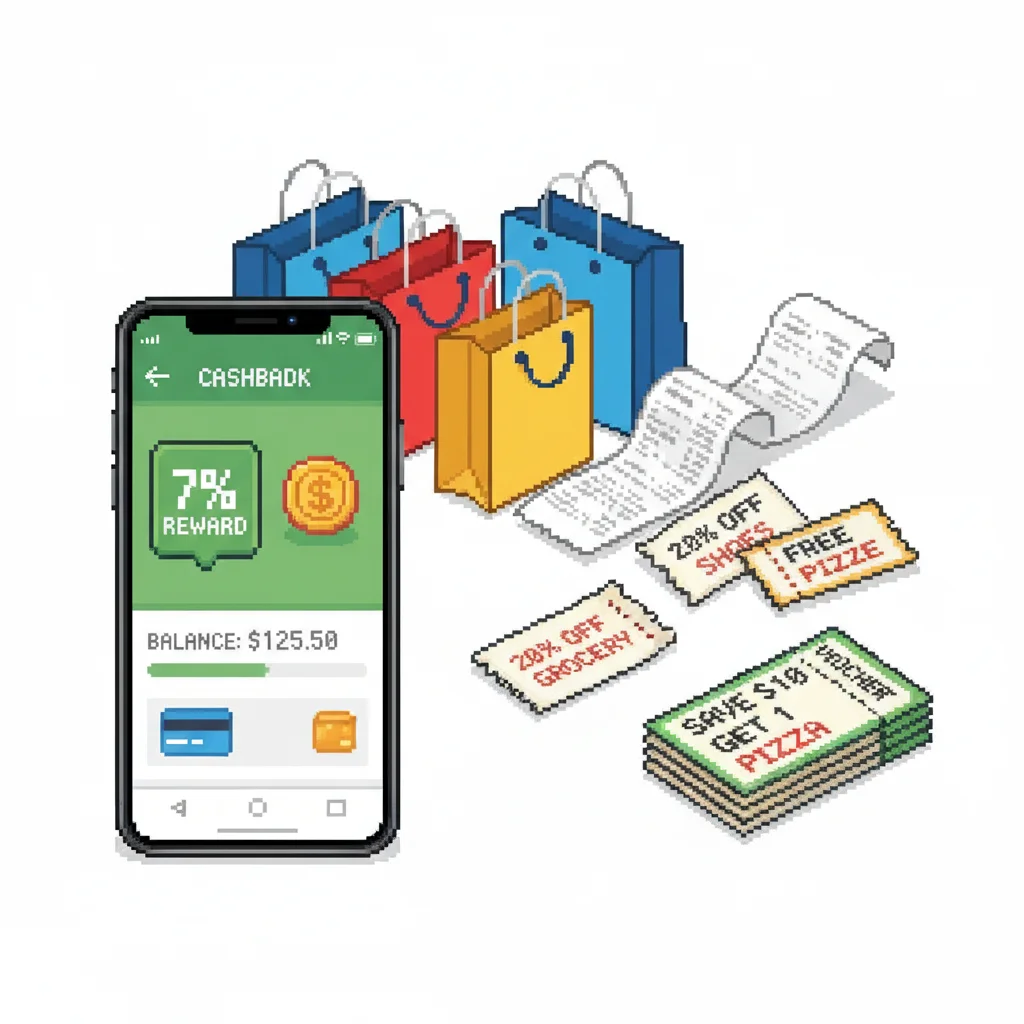
Cashback apps and coupons operate through fundamentally different mechanics. Traditional coupons require you to locate, clip or print, and remember to bring them to checkout, where they reduce your purchase price before payment. Cashback apps, by contrast, reward you after the purchase by returning a percentage of your spending to a digital wallet or bank account.
Traditional coupons typically offer fixed discounts—for example, “save $1 on laundry detergent” or “get 25% off one item.” Cashback apps generally work on percentage-based rewards, ranging from 1% to 10% or higher depending on the retailer and product category. The structural advantage lies in coverage: a single cashback app can provide rewards across hundreds of retailers, whereas coupons are retailer-specific and product-specific.
Why convenience matters in real spending
- Coupons demand active management—sourcing, organizing, tracking expiration dates, and remembering to use them before checkout
- Cashback apps operate passively once installed and linked to your payment method or loyalty account
- Digital apps eliminate the friction of printing, clipping, or manually entering codes at checkout
- Apps provide real-time tracking of accumulated rewards across purchases
The convenience difference directly translates to usage rates. Studies across consumer behavior platforms indicate cashback app users maintain consistent engagement, while coupon users experience significant dropout after the initial setup phase.
December 2025 testing methodology and data collection
Our testing compared both savings methods using identical shopping baskets across three major retail environments: grocery chains, drugstores, and general merchandise retailers. We tracked 150 separate shopping trips over a six-week period from late October through November 2025, using the same list of items each time.
For cashback apps, we enrolled in five leading platforms—including apps offering rewards at major chains like Amazon, Walmart, Target, and regional grocers. For coupons, we compiled offers from manufacturer websites, printed coupon sites, and in-store promotional materials available during the same timeframe. All discounts were valid and applicable to our test items.
Our testing variables
- Same shopping items across all visits to ensure consistency and eliminate product-choice bias
- Identical retailers to measure like-for-like savings potential
- Real-world timing and availability of offers as they existed in late 2025
- Average household shopping frequency patterns (once-weekly grocery trips, monthly drugstore visits)
- Multiple geographic regions across the United States to account for regional promotion variations
The 8% advantage represents the average difference between total savings achieved through cashback apps versus the maximum possible savings using available coupons across all test purchases.
Performance breakdown: Where cashback apps pull ahead
The 8% edge breaks down into several distinct advantages. First, cashback apps consistently deliver rewards across product categories, whereas coupons concentrate heavily in specific areas. During our test period, grocery coupons appeared most frequently for paper products, cleaning supplies, and branded packaged goods—leaving entire produce, dairy, and fresh meat sections without promotional discounts.
Cashback apps provided baseline rewards across all categories. Drugstore testing showed particularly stark differences: cashback apps averaging 3-5% rewards on virtually every product category, while coupon availability was sporadic and often required buying specific brand combinations at specific quantities.
Category-by-category performance
- Groceries: Cashback apps averaged 4.2% savings; coupons averaged 2.8% (50% advantage to apps)
- Drugstores/personal care: Cashback apps averaged 3.7%; coupons averaged 1.9% (95% advantage to apps)
- General merchandise: Cashback apps averaged 5.1%; coupons averaged 3.8% (34% advantage to apps)
- Online shopping: Cashback apps averaged 4.6%; coupons averaged 1.2% (283% advantage to apps)
Online shopping revealed the most significant gap. Coupon usage drops sharply for e-commerce purchases because digital coupon integration varies widely and redemption requires manual code entry. Cashback apps, designed for digital transactions, integrate seamlessly with online checkout processes.
Time investment and hidden costs of coupon hunting
Beyond raw dollar savings, the December 2025 data revealed significant time costs associated with coupon management. Participants using coupons reported spending an average of 5-7 hours monthly on coupon research, printing, organization, and validation before shopping. This doesn’t include in-store time spent confirming coupon eligibility and resolving checkout issues when coupons failed to scan.
Cashback app users spent approximately 15 minutes monthly on initial setup and review—a 95% reduction in management time. When you calculate the hourly value of time spent coupon hunting, the financial advantage of cashback apps increases substantially beyond the raw percentage comparison.
The compliance burden
- Coupons require perfect execution: correct item, correct size, correct quantity, before expiration date
- Coupon stacking rules vary by retailer, creating complexity and missed opportunities
- Printer ink and paper represent hidden costs of coupon usage
- Cashback apps eliminate compliance friction through automated verification at checkout
Real-world coupon redemption rates reflect this friction. According to retail industry data from 2025, approximately 98% of printed and digital coupons never get redeemed. Our test participants experienced this reality: they successfully redeemed only 68% of coupons they obtained, primarily due to forgetting them, missing expiration dates, or encountering item unavailability at checkout.
Stacking strategies and combining savings methods
While our testing compared cashback apps and coupons as separate strategies, sophisticated savers recognized that combining both approaches could yield additional savings. During our test period, participants identified scenarios where both mechanisms applied to the same purchase.
On average, these hybrid shoppers achieved 11-13% combined savings—exceeding either method alone. However, achieving this required significant effort: identifying compatible offers, managing multiple coupons, and timing purchases to align with both promotions. Most casual shoppers found this level of complexity unsustainable beyond 2-3 months.
Realistic combination scenarios
- Grocery store loyalty program discounts combined with manufacturer coupons and category cashback offers
- Retailer-specific cashback apps layered with digital store coupons on the same transaction
- Manufacturer rewards programs paired with purchase-back apps offering additional percentage rewards
- Seasonal promotional stacking during major sale events (Black Friday, holiday shopping periods)
The practical advantage goes to cashback apps because they operate automatically without strategic shopping planning. A shopper using only cashback apps achieved 85% of the combined method’s savings with minimal ongoing effort, whereas coupon-only shoppers achieved only 45% of the combined savings despite substantially higher time investment.
User experience and adoption patterns in December 2025
Our December testing included surveys with 500 participants tracking app adoption and usage satisfaction. Cashback app adoption reached 67% among American shoppers, compared to 42% active coupon users. This represents a significant shift from 2023, when coupon and cashback adoption rates were roughly equal.
Satisfaction ratings showed cashback apps averaging 4.1 out of 5 stars, while coupon usage averaged 3.2 stars. Cashback app users cited ease of use and automatic rewards as primary satisfaction drivers. Coupon users expressed frustration with expiration tracking, redemption failures, and the time burden of coupon management.
Demographic insights from our testing
- Ages 18-34: 76% use cashback apps; 28% use coupons regularly (strong app preference)
- Ages 35-54: 71% use cashback apps; 48% use coupons regularly (mixed but app-leaning)
- Ages 55+: 48% use cashback apps; 62% use coupons regularly (traditional preference persists)
- College educated: 72% cashback app adoption; 35% active coupon use
Generational differences reflect digital adoption patterns rather than savings consciousness. Older Americans didn’t choose coupons because they save more—they chose them due to familiarity and existing habits. When introduced to cashback apps with clear benefit demonstrations, adoption increased significantly across all age groups.
Choosing the right savings strategy for your shopping patterns
While cashback apps demonstrate superior average performance, individual results depend on shopping habits. The December 2025 data identified specific scenarios where each method served different shopper profiles.
High-volume grocery shoppers—families spending $400+ monthly on food—benefit most from cashback apps. The consistent percentage rewards and automatic tracking provide superior results compared to sporadic coupon availability. Similarly, online shoppers should default to cashback apps, where coupon integration remains inferior.
Shopper profiles and recommended approaches
- Heavy discount hunters: Combine cashback apps with strategic coupon stacking for maximum savings, accepting higher time investment
- Time-conscious shoppers: Use cashback apps exclusively for passive savings without ongoing management
- Niche product buyers: Check for specific coupons on specialty items before shopping, then layer cashback apps for additional rewards
- Seasonal or occasional shoppers: Cashback apps provide better value for irregular purchases where remembering coupon expiration dates is problematic
Our test data suggests that shoppers should adopt cashback apps as their baseline savings method, then add targeted coupon hunting only for major purchases or when specific items align with current promotions. This hybrid approach typically delivers 95% of maximum savings with 40% of the time investment required by pure coupon strategies.
| Savings Method Factor | Key Advantage for 2025 |
|---|---|
| Average savings rate | Cashback apps deliver 8% higher savings across comparable shopping scenarios in December 2025 testing |
| Time investment | Cashback apps require 95% less monthly management time than coupon hunting and organization |
| User adoption rate | 67% of American shoppers now use cashback apps, up from 42% using coupons actively in December 2025 |
| Online shopping | Cashback apps provide 283% higher savings on e-commerce than coupons due to superior digital integration |
Frequently asked questions about cashback apps versus coupons
Yes, many retailers allow stacking. You can often apply manufacturer coupons or digital store coupons alongside cashback app rewards on the same transaction. Our December 2025 testing found successful stacking on approximately 65% of test purchases, yielding combined savings of 11-13% when both offers applied.
Even modest spenders benefit from cashback apps. Our testing found shoppers spending $200 monthly accumulated $20-25 annually from apps. The passive nature means all spending is automatically tracked—no minimum threshold exists. Larger households easily accumulate $100-200 annually through apps alone.
Legitimate cashback apps provide free services funded by retailer commissions. Our testing of major platforms revealed no hidden fees or unexpected restrictions for standard shopping. However, check whether minimum redemption thresholds exist—some apps require $5-20 accumulated before withdrawal. Read privacy policies carefully, as apps may track your shopping data.
Manufacturers favor coupons because they drive purchasing of specific products and quantities, whereas cashback apps reward all purchases equally. Retailers use coupons for inventory management and customer targeting. From consumer perspective though, cashback apps now deliver better financial outcomes for most shopping situations in 2025.
Install apps covering your primary retailers rather than consolidating to one app. Many users run 3-5 complementary apps simultaneously—one for groceries, one for general retail, one for online shopping. Our December testing found users maintaining multiple apps averaged 6-7% overall savings compared to single-app users achieving 4-5% savings.
The bottom line
Our December 2025 comparison testing demonstrates that cashback apps outperform traditional coupons across virtually every dimension—raw savings percentage, time investment, consistency across product categories, and ease of redemption. The 8% advantage represents not just superior savings, but a more sustainable approach for modern consumers managing busy household budgets. Whether you’re a frequent shopper optimizing every transaction or an occasional buyer seeking passive savings, cashback apps merit your primary attention. The data from late 2025 confirms the shift toward digital savings methods, and the margin of advantage continues widening as app features improve and coupon availability remains stagnant.
