Why BNPL Black Friday usage jumped 23% in 2025: Should you use it?
Advertisements
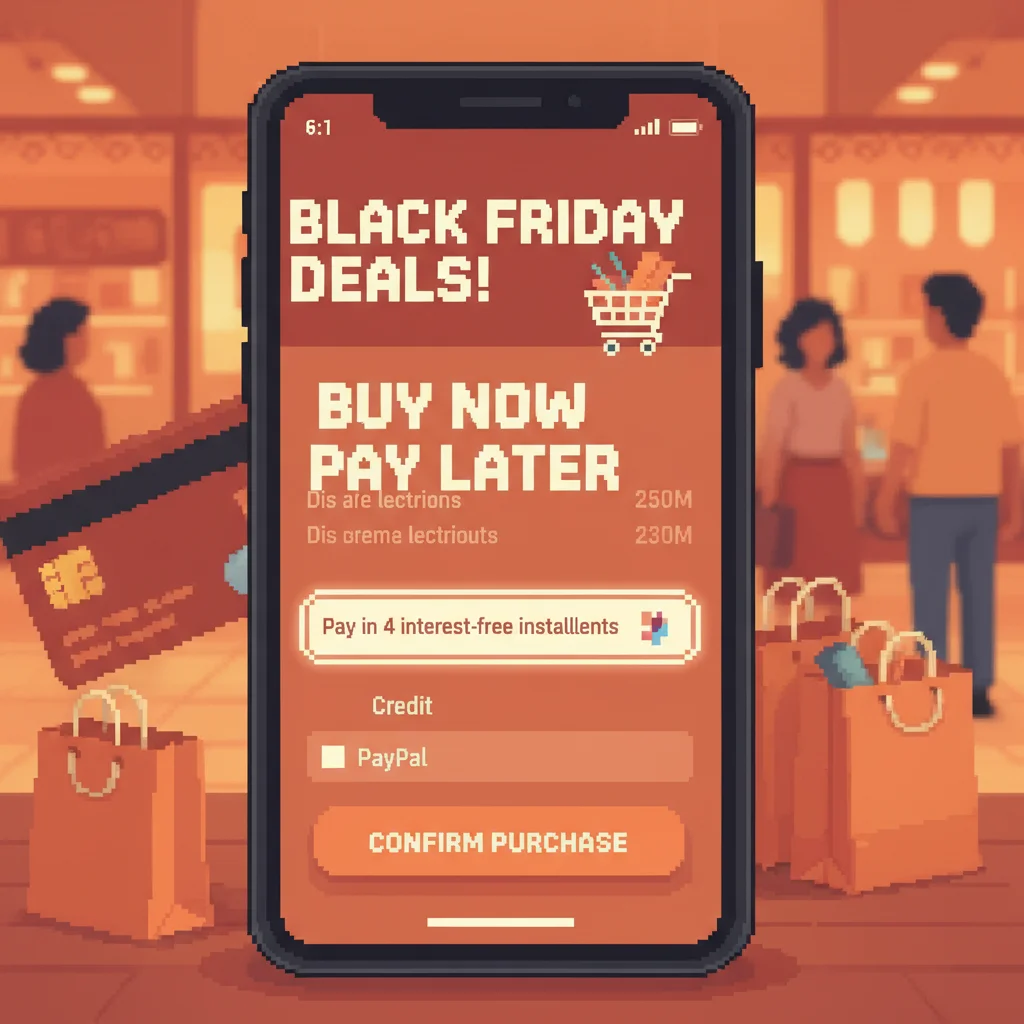
BNPL usage surged 23% this Black Friday 2025, driven by inflation and holiday spending pressure. Learn why consumers adopted this payment method, the genuine benefits alongside hidden costs, and whether it makes sense for your shopping habits.
Black Friday 2025 saw a significant shift in how consumers financed their holiday purchases. Why BNPL Black Friday usage jumped 23% this year reveals deeper trends about consumer behavior, economic pressures, and the growing acceptance of payment flexibility. For shoppers navigating record-high prices and stretched budgets, understanding this trend—and whether to participate—matters for your financial health and shopping strategy.
The dramatic rise of BNPL this Black Friday
The 23% surge in BNPL usage this Black Friday wasn’t accidental. Industry data from payment platforms and consumer finance reports indicates that buy now pay later services processed significantly more transactions during the 2025 holiday season compared to the previous year. This growth outpaced traditional credit card usage growth and reflects a meaningful shift in shopper preferences.
Several major retailers, including Target, Walmart, and Best Buy, prominently featured BNPL options at checkout during Black Friday and Cyber Monday. This visibility, combined with aggressive marketing from BNPL providers like Affirm, Klarna, and Afterpay, created a perfect storm of awareness and convenience. When payment flexibility is just one click away and endorsed by trusted retailers, adoption naturally accelerates.
The timing mattered too. Black Friday 2025 fell during a period when inflation remained elevated compared to pre-pandemic levels, and consumers faced the steepest holiday shopping costs in years. Average Black Friday spending per household exceeded $400, pushing many shoppers toward split-payment solutions rather than lump-sum charges.
Why did BNPL adoption spike 23%?
The 23% jump didn’t happen in isolation. Several converging factors explain why more consumers reached for BNPL during Black Friday 2025:
Economic pressure and budget constraints
Household budgets remained tight for many Americans. While unemployment stayed low, wage growth failed tokeep pace with prices for housing, groceries, and essentials. When discretionary spending arrived—holiday gifts, seasonal purchases—consumers felt the strain more acutely. BNPL allowed shoppers to buy now and spread payments over four to twelve weeks, easing the immediate financial blow.
- Rising cost of living reduced immediate purchasing power for holiday shopping
- Credit card debt already exceeded $1 trillion nationally, limiting appetite for additional credit card charges
- BNPL offered perceived flexibility without additional interest if payments stayed on schedule
- Younger shoppers, already comfortable with app-based payments, embraced the option readily
Retailer incentives and seamless integration
Retailers discovered that offering BNPL reduced cart abandonment. When a $300 purchase suddenly becomes four $75 payments, psychological resistance to buying drops. Major chains invested heavily in integrating BNPL at checkout, making it as easy to select as paying with a debit card. This frictionless experience directly drove usage increases.
Aggressive consumer marketing
BNPL companies spent heavily on Black Friday advertising. TV spots, social media ads, and email campaigns promoted “interest-free” payment splits to millions of households. The messaging emphasized freedom and flexibility while downplaying the behavioral and financial risks. This saturation in advertising raised awareness and normalized the payment method among demographics that might never have considered it otherwise.
How BNPL works and what you need to know
BNPL services operate as a middleman between you and the retailer. When you select a BNPL option at checkout, the company pays the retailer immediately, and you repay the BNPL company in installments—typically four equal payments over six to eight weeks, or longer payment plans up to twelve months.
The basic mechanics
The process is straightforward from a user perspective. You enter your payment information, the BNPL app or website performs a soft credit check (not a hard pull that impacts your credit score), and if approved, you receive a payment schedule. Unlike credit cards, BNPL typically charges no interest on regular purchases, making it structurally different from traditional lending.
However, missing payments triggers late fees—usually $10 to $35 per missed installment. Some platforms charge even higher fees after multiple missed payments. Late fees accumulate quickly, especially on larger purchases split across more payments. A $500 purchase with one missed payment could generate a $35 late charge, turning a supposedly “free” payment method into a costly one.
- Approval is often instant or within minutes, with minimal documentation required
- Most platforms use soft credit checks that don’t ding your credit score
- Retailers receive payment immediately, but you’re on the hook to the BNPL company
- Interest-free periods vary: some are truly interest-free, while others charge interest after a promotional period
The advantages of using BNPL during Black Friday
BNPL isn’t inherently harmful. Used strategically, it offers genuine benefits, especially during high-spending periods like Black Friday:
Budget flexibility without credit card debt
If you have discipline and a solid repayment plan, BNPL spreads cost across weeks rather than hitting your bank account or credit card in one lump sum. This can ease cash flow stress during months when multiple expenses overlap—gift buying, holiday travel, year-end bills.
Protection against impulse spending
BNPL’s installment structure makes you more aware of the actual cost. Seeing a $300 item as four $75 payments feels different than a single charge. This “payment segmentation” can paradoxically reduce buyer’s remorse by making the purchase feel more manageable and thought-through.
No credit card interest if you stay on schedule
Credit card APRs range from 15% to 25% for average consumers. If you’re carrying a balance, a $500 BNPL purchase costs zero interest, whereas the same item on a credit card at 20% APR costs an extra $50 to $100 in interest charges over time. For Black Friday shoppers already maxed out on credit, BNPL interest-free periods provide genuine relief.
The hidden costs and risks of BNPL
The “interest-free” marketing message obscures substantial risks that often catch consumers off guard:
Late fees and compounding costs
Missing even one payment on a four-payment plan costs $10 to $35 immediately. If you’re already tight on cash—the original reason you chose BNPL—unexpected expenses can derail your payment schedule. A single missed payment cascades: you owe a late fee, your next payment is due regardless, and now you’re juggling two payments plus a penalty. Analysts note that late-fee revenue comprises a growing share of BNPL companies’ profitability, indicating the problem is systemic, not rare.
Overspending and debt accumulation
Studies on BNPL usage reveal a troubling pattern: users spend 40% to 50% more when BNPL is available. The ease of splitting payments psychologically reduces purchase resistance. During Black Friday—already a period of elevated spending—this effect compounds. Shoppers end up with multiple BNPL purchases across different platforms, each with its own payment schedule. Managing four to six overlapping BNPL commitments is cognitively demanding and error-prone.
No credit score improvement and weak consumer protections
BNPL transactions don’t report to credit bureaus as positive payment behavior. You receive no credit-building benefit. Conversely, missed payments may be reported negatively, harming your credit score. Additionally, BNPL lacks the fraud protections and dispute resolution mechanisms that credit cards offer. If a retailer doesn’t ship your purchase or delivers a defective item, your recourse is limited—you still owe the BNPL company even if you didn’t receive the goods.
- Late fees ($10–$35+) turn “free” financing into expensive debt if you miss even one installment
- Users with BNPL access spend 40%–50% more per shopping session
- No credit-building benefits; missed payments harm credit scores
- Weaker fraud and purchase protection compared to credit cards
- Multiple BNPL accounts create tracking burden and payment complexity
Should you actually use BNPL? A balanced perspective
The 23% usage jump reflects both genuine consumer need and aggressive marketing. Whether BNPL is right for you depends on your financial situation and discipline:
Use BNPL if: You have a stable income, a concrete repayment plan, and confidence you won’t miss payments. The purchase solves a real need rather than a want, and you’re replacing a more expensive financing option (like credit card interest or payday loans). You’ve checked your budget and confirmed the payment fits your cash flow for the next two months. You’re purchasing from a retailer with strong return policies, adding a layer of protection if something goes wrong.
Avoid BNPL if: Your income is irregular or uncertain. You’re already carrying high credit card debt or using multiple BNPL services. The purchase is discretionary or impulse-driven—BNPL’s convenience makes you likely to overbuy. You struggle with automatic payment management or have a history of late fees. You’re using BNPL because you lack emergency savings; that’s a sign you can’t afford the purchase at all, regardless of payment structure.
The distinction matters. BNPL is a payment tool, not free money. It works best when you’d buy the item anyway but benefit from cash flow flexibility. It fails when it enables overspending you’d otherwise avoid.
Smart alternatives to BNPL for holiday shopping
BNPL isn’t the only path forward. Depending on your situation, other strategies may serve you better:
High-yield savings accounts for goal-based saving
If you know holiday shopping is coming, building a dedicated savings account throughout the year eliminates payment stress entirely. Current high-yield savings accounts offer 4% to 5% annual interest, turning your planning into earning rather than borrowing. This approach requires planning but removes financial risk entirely.
Credit cards with rewards and promotional interest-free periods
Premium credit cards offer longer interest-free promotional periods—up to 18 months for qualified purchases—plus cash back or travel rewards. The catch is higher annual fees ($95–$450) and stricter credit requirements. For high-credit-score borrowers making large purchases, this strategy yields better rewards and stronger consumer protections than BNPL.
Employer-sponsored shopping programs and benefits
Many employers partner with retailers to offer employee discounts or purchase matching programs. Some companies offer interest-free employee loans for major purchases. Checking your employer benefits portal before turning to external financing often reveals overlooked options.
Retailer credit cards with deferred interest
Retailers like Target and Best Buy offer branded credit cards with deferred interest promotions (e.g., 18 months interest-free on purchases over $250). These carry risks—if the full balance isn’t paid by the deadline, retroactive interest applies—but offer legitimate interest-free windows without late fee risk if you meet the terms.
| Payment Method | Key Considerations |
|---|---|
| BNPL (Buy Now Pay Later) | Interest-free if on-time, but late fees ($10–$35+) quickly offset savings. Enables overspending. No credit-building. Use only if disciplined and have concrete repayment plan. |
| Credit Card (High-Yield Rewards) | 2–5% cash back or travel rewards. Builds credit score. Strong fraud protection. Annual fee ($95–$450) and interest if balance carried. Better for high-credit-score users. |
| Dedicated Savings Account | Zero risk. 4–5% interest on savings. Builds financial discipline. Requires planning ahead. Eliminates payment stress and debt entirely. |
| Deferred-Interest Retail Card | 18-month interest-free on large purchases. Retroactive interest if not paid off by deadline. Better protection than BNPL but requires strict adherence to repayment terms. |
Frequently asked questions about BNPL Black Friday usage
BNPL transactions typically don’t improve your credit score since they don’t report to credit bureaus as positive payment history. However, missed payments may be reported negatively, damaging your score. Soft credit checks during approval don’t impact your score, but hard pulls or late-payment defaults do.
Late fees of $10–$35 apply immediately, and your next payment still comes due. Repeated missed payments trigger higher fees and may be reported to credit bureaus, harming your score. Some platforms freeze your account until balances are settled, preventing future BNPL use until resolved.
Retailer return policies apply regardless of payment method. However, refunds typically go back to the BNPL service, not your bank account. If you’ve already made payments, the refund credits future installments rather than returning cash immediately, complicating your cash flow.
No. Credit cards offer stronger fraud protection, dispute resolution, and purchase protection. BNPL transactions carry less legal recourse if merchants don’t ship items or deliver defective goods. You’re still liable to the BNPL company even if the purchase fails to materialize as promised.
Experts suggest limiting yourself to one active BNPL account at a time. Multiple overlapping accounts create tracking burden, increase missed-payment risk, and spiral debt accumulation. During Black Friday, the temptation to open new accounts for multiple retailers should be resisted unless payment schedules align clearly.
The bottom line
The 23% surge in BNPL usage this Black Friday reflects both genuine financial pressure on consumers and effective marketing from BNPL providers. The payment method serves a real purpose—easing cash flow during high-spending periods—but carries hidden risks around late fees, overspending, and weak consumer protections. Before adopting BNPL, assess whether you’d purchase the item at all without payment splitting, whether you have a concrete repayment plan, and whether you’re truly disciplined enough to avoid missing payments. For many shoppers, alternatives like dedicated savings accounts, rewards credit cards, or employer benefits offer better value with lower risk. The key is viewing BNPL as a tool for specific situations, not a default payment method for every holiday purchase.
