After-Christmas Clearance Sales: where to find 70% off deals December 26
Advertisements
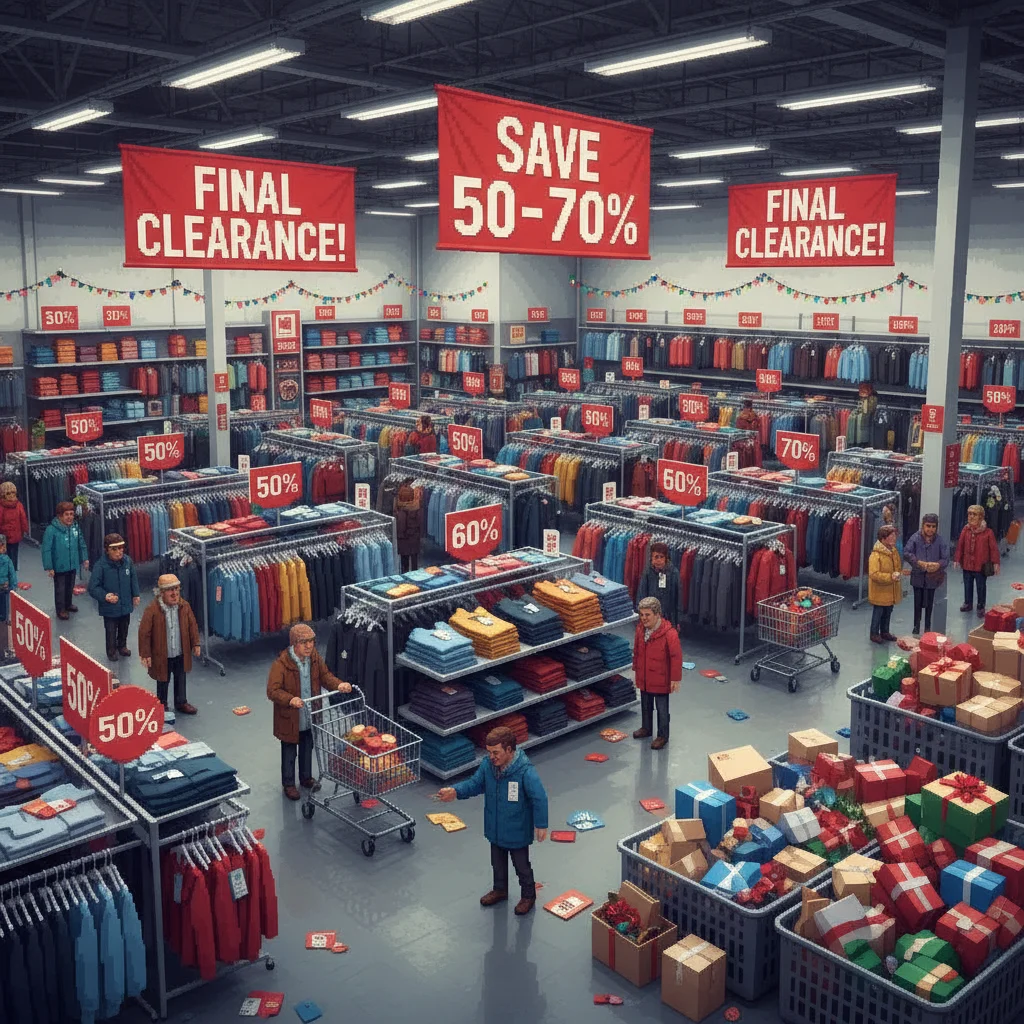
After-Christmas clearance sales on December 26 deliver exceptional savings of up to 70% off as retailers clear holiday inventory. Success requires understanding timing strategies, identifying stores with the deepest discounts, and knowing which product categories offer the steepest markdowns.
The week following Christmas represents one of the most profitable shopping windows of the year, yet many consumers miss the opportunity entirely. After-Christmas clearance sales on December 26 aren’t accidental discounting—they’re the result of retail inventory management strategies that accelerate markdown cycles once peak holiday traffic declines. For savvy shoppers in the United States, this timing window presents a genuine chance to acquire high-value merchandise at prices that won’t reappear until summer or end-of-season sales. Understanding what happens during this clearance period, where to hunt for the deepest cuts, and how to navigate competing retailers gives shoppers a measurable edge.
Why retailers slash prices immediately after Christmas
Retail economics shift dramatically on December 26. Major department stores and big-box retailers face a fundamental inventory challenge: Christmas merchandise that didn’t sell during peak holiday traffic now occupies valuable shelf space that must be cleared for January inventory. This creates urgency that translates directly into aggressive markdowns.
Data from the National Retail Federation indicates that holiday returns peak between December 26 and January 5, with an estimated 15-20% return rate on holiday purchases. Simultaneously, retailers need to liquidate excess seasonal stock—wrapping paper, holiday decorations, winter clothing bundles, and gift sets that are no longer central to their merchandising strategy. Unlike clearance periods later in the season, which may be drawn out over weeks, post-Christmas markdowns happen rapidly. Stores that begin clearance on December 26 often reduce prices an additional 10-25% every three to five days until inventory moves.
The inventory turnover imperative
- Seasonal items lose 30-40% of their perceived value once holidays pass, forcing faster markup reductions to move volume
- Store shelf space commands rent-equivalent costs; holding unsold merchandise past December costs retailers measurably
- Tax implications: unsold inventory can affect Q4 financial statements, incentivizing clearance before year-end
- Competition drives markdown velocity; retailers matching competitors’ discounts creates a race to the bottom that benefits shoppers
This structural dynamic explains why after-Christmas sales differ fundamentally from regular clearance. The pressure is time-bound and intense, which means the deepest discounts typically occur in the first 7-10 days after Christmas rather than spreading across a month.
Identifying stores with the steepest December 26 discounts
Not all retailers discount equally on December 26. Department stores, discount chains, and electronics retailers move inventory at different speeds and offer varying markdown depths. Understanding these patterns helps shoppers prioritize which stores to visit first.
High-discount retailers
- Target and Walmart: Begin aggressive markdowns on December 26, often 40-60% off seasonal items, housewares, and winter apparel. Both retailers use price matching and online-to-store policies that amplify savings
- JCPenney and Kohl’s: Historically offer some of the steepest post-Christmas discounts, with apparel, home goods, and accessories reaching 60-70% off. Kohl’s stacks Kohl’s Cash rewards on clearance purchases, effectively increasing final savings
- Best Buy: Clears holiday tech bundles and seasonal electronics heavily. Expects deep cuts on TVs, smart home devices, and gaming bundled packages within 5 days of December 26
Moderate-discount retailers
- Macy’s: Typically discounts 40-50% on first markdown pass, with additional cuts following if inventory remains
- Gap and Old Navy: Fashion retailers usually hit 50-60% off but may reserve deepest cuts for online channels rather than in-store
- HomeGoods and TJ Maxx: Already operate on off-price models; post-Christmas markdowns are less dramatic but still represent solid savings on remaining holiday décor and gift items
Chains like Costco, Sam’s Club, and Amazon rarely participate in aggressive post-Christmas clearance, as their inventory models and pricing strategies differ from traditional retail. Online retailers like Wayfair and Overstock may extend discounts longer but start from higher baseline prices, making the percentage discount less meaningful than in-store savings.
Strategic timing for December 26 shopping
The calendar matters enormously during post-Christmas clearance. Most retail locations open earlier than usual on December 26 (often 8 AM instead of 10 AM) because clearance merchandise must be processed and priced before doors open. Arriving at opening time—or checking store websites the evening of December 25 for online availability—captures inventory before crowds and stock depletions occur.
Time-of-day advantages
- Opening hours (first hour after store opens): Maximum selection, least competition, staff available to assist with questions or price checks
- Weekday mid-morning (December 26-27, Tuesday-Wednesday): Significant inventory remains, but professional deal hunters have already shopped. Crowds are manageable compared to weekends
- Afternoon hours after December 27: Stock depletion becomes visible; best items have sold, though additional markdowns may appear as employees scan and re-price remaining merchandise
- Weekend post-December 28: Popular items are gone; clearance racks contain niche and odd-size inventory that may not interest most shoppers
A secondary timing advantage exists for online shopping. Many retailers maintain separate online clearance inventories, and prices may drop further online than in-store on December 26-27 as they optimize digital fulfillment. Shopping December 26-27 online can yield 60-70% off with free or discounted shipping, avoiding the in-store crowding entirely.
Product categories with the deepest December 26 cuts
Not every product category discounts equally. Seasonal and gift-adjacent merchandise experiences the steepest markdowns because it has no value once December passes. Understanding which categories face the most aggressive clearing allows shoppers to allocate their time strategically.
Categories reaching 60-70% off
- Holiday décor and seasonal decorations (wreaths, lights, outdoor displays) hit 60-70% off immediately because next demand is January 2026
- Winter apparel bundled as gift sets or holiday collections (ugly sweaters, thermal packs) drops 60-70% as styles become unsaleable post-season
- Gift wrapping, gift bags, bows, and greeting cards often reach 70% off because they have zero value after December 26
- Holiday-themed home goods (tablecloths, dishes, kitchen linens) and festive entertaining sets clear at 60-70% off
Categories at moderate 40-50% discounts
- Electronics and tech bundles marketed as holiday gifts clear at 40-50% but rarely deeper because these items hold value year-round
- Apparel not specifically holiday-themed (sweaters, coats, jeans) discounts moderately because retailers can carry them into winter sales
- Toys and games not tied to specific holidays clear at 40-50% because unsold inventory can be held for future selling seasons
- Small appliances and kitchen gadgets marketed as gifts clear at 40-50% rather than deeper, as they’re seasonally neutral
Gift sets—bundled merchandise in holiday packaging—experience the steepest cuts because retailers cannot unbundle and re-price components. A cosmetics gift set marked down 70% represents greater value than individual items purchased separately, making gift sets particularly attractive on December 26.
Strategies to maximize your December 26 shopping advantage
Effective post-Christmas shopping requires more than showing up on December 26. Strategic planning, knowledge of retailer policies, and tactical awareness of inventory systems multiply the value shoppers extract from this single-day opportunity window.
Pre-shopping research and planning
- Check retailer websites on December 24-25 to identify which stores advertise December 26 clearance. Major retailers announce this in advance to drive traffic
- Review store flyers and email promotions sent December 23-24, which often highlight clearance sections and bonus savings on gift cards
- List specific items you need before December 26 rather than browsing impulse purchases; this prevents decision fatigue and maximizes your time efficiency
- Sign up for loyalty programs the night before if you haven’t already; some retailers grant immediate discounts or bonus points during clearance events
In-store and online tactics
- Head directly to clearance sections rather than browsing full-price merchandise; December 26 clearance racks are clearly marked in most stores
- Ask employees about rain checks on extremely popular items that sell out; some retailers will honor the clearance price if the item is restocked
- Use mobile price-checking apps to verify that clearance prices have dropped since December 24; occasionally items are not re-priced immediately
- Stack discounts where possible: pay with a credit card offering bonus points, use a coupon or rebate app, and ensure cashiers apply sale prices correctly at checkout
Inventory system advantages
- Large retailers often hold separate online inventory for December 26; check the website even if the in-store selection is depleted
- Some chains allow customers to order in-store items online for pickup later the same day, securing them before crowds deplete stock
- Price matching policies are often generous during clearance; if a competitor’s clearance price is lower, major chains will honor it
- Return policies are typically extended through early January post-Christmas; purchases made on December 26 often have until January 15 for returns without receipt
The most effective shoppers combine these tactics into a coordinated approach: they research December 24-25, prioritize store locations and departments, arrive early on December 26, and complete online shopping simultaneously to capture inventory across channels.
Avoiding common December 26 shopping pitfalls
Post-Christmas clearance presents hazards alongside opportunities. Understanding what to avoid protects your budget and prevents poor purchasing decisions made under time pressure or herd mentality.
First, the sunk-cost fallacy distorts judgment during clearance shopping. A 70% discount feels exceptionally valuable, yet if an item doesn’t meet your actual needs—because you’re under time pressure or swayed by the discount percentage itself—the savings disappear when the item sits unused. Professional shoppers recommend verifying need before verifying price, ensuring that discounts apply to items that genuinely have utility in your life.
Second, stock depletion and size unavailability reduce real value. A winter coat discounted 70% is worthless if your size is sold out and the retailer has no rain check policy. Verify size and condition availability before committing to a purchase, especially for apparel and shoes where size/fit is non-negotiable.
Third, clearance-specific inventory is often lower quality or unusual sizes compared to regular stock. Some retailers use post-Christmas clearance as an outlet for damaged packaging, overstock from prior seasons, or discontinued colors nobody wanted. Inspect merchandise carefully; a 70% discount on a defective item or item with damage is no savings at all.
Finally, avoid purchasing excessive quantities of staple items (like storage containers or seasonal batteries) simply because they’re discounted. Storage and shelf space have real costs in your home. Calculate whether the discount justifies the storage requirements before buying in bulk.
| Retailer Strategy | Typical December 26 Discount Range |
|---|---|
| Seasonal items (décor, holiday apparel) | 60-70% off at Target, Walmart, Kohl’s; inventory clears within 5-7 days |
| Electronics and tech bundles | 40-50% off at Best Buy, Amazon, Walmart; deeper discounts rare due to year-round demand |
| Gift-bundled items (sets, packaged gifts) | 60-70% off systemwide; bundled merchandise cannot be unbundled, forcing aggressive clearing |
| Timing advantage window | Best selection and deepest prices during store opening hours (first 2-3 hours after December 26 opens) |
Frequently asked questions about after-Christmas clearance sales
Arrive during the first hour after your target store opens, typically 8 AM or 9 AM on December 26. Most retailers begin clearance operations early morning, and inventory is freshest with minimal depletion. Mid-morning weekdays (December 26-27) offer reasonable crowds compared to afternoons when stock visibility declines significantly.
Many online retailers offer comparable or deeper discounts on December 26, though pricing varies by item and inventory. Retailers like Walmart, Target, and Kohl’s maintain separate online clearance inventory. Amazon rarely offers aggressive post-Christmas clearance. Check both channels simultaneously to compare prices across the same items before purchasing.
Yes, most major retailers extend return windows post-Christmas, typically allowing returns through January 15-31 even without receipts. Clearance items are usually returnable under standard policies. Verify specific return policies before purchasing, as some clearance merchandise may have modified terms or require proof of purchase.
Seasonal items (holiday décor, wrapping paper, winter clothing bundles) and gift-bundled merchandise reach 60-70% off. Electronics and appliances discount 40-50% due to year-round demand. Prioritize seasonal items first; these clear fastest and offer the steepest savings since they’re worthless after December 26.
Selection diminishes significantly by December 27-28, though additional markdowns may occur on remaining items. Waiting rarely yields better prices overall; you’re more likely to lose preferred items and sizes. December 26 morning shopping captures peak selection at competitive markdown levels. Waiting provides minimal pricing advantage but eliminates inventory access.
The bottom line
After-Christmas clearance sales on December 26 represent a genuine opportunity for substantial savings, with seasonal and gift-bundled merchandise reaching 60-70% off at major retailers nationwide. Success requires strategic timing (arriving at store opening), understanding which categories experience the steepest cuts (seasonal and bundled items), and knowing which retailers clear inventory most aggressively (Kohl’s, Target, Walmart, and JCPenney). While the window is brief—deepest discounts typically last 5-10 days—shoppers who plan ahead and prioritize season-specific merchandise maximize both savings and selection. The structural economics of holiday retail create this advantage; once December 26 passes, the urgency that drives aggressive markdowns declines significantly.
