Spot fake deal headlines and avoid overpaying: Red flags to watch this week
Advertisements
Fake deal headlines cost shoppers an estimated 12% extra through manipulated pricing and deceptive discount claims. Learn the red flags, tactics, and verification tools to protect yourself.
Every week, shoppers across the United States encounter headlines promising spectacular savings, slashed prices, and limited-time offers. Yet many of these deals are anything but genuine. Research and consumer reports suggest that fake deal headlines mislead buyers into paying inflated prices under the illusion of saving money. Understanding how these tactics work and what warning signs to watch for is crucial to protecting your wallet this shopping season and beyond.
What are fake deal headlines and why do they matter?
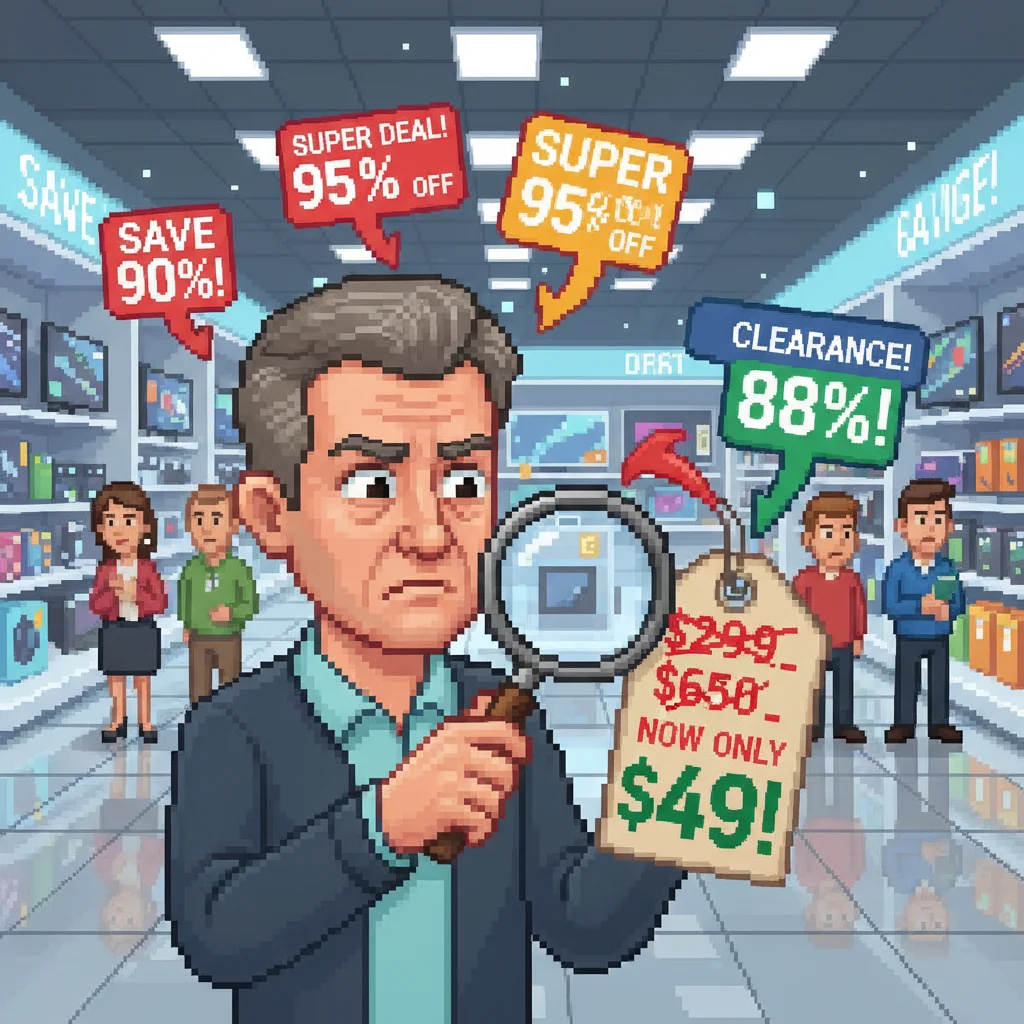
Fake deal headlines represent a deceptive marketing practice in which retailers artificially inflate original prices, then advertise deep discounts off those inflated figures. The shopper sees the word “50% off” and feels they’ve found a bargain, when in reality the final price is the same as—or higher than—competitor prices or historical averages.
This tactic is distinct from simple misleading advertising because it exploits a psychological principle called “anchoring.” By establishing a high anchor price (the original, inflated amount), retailers manipulate shoppers’ perception of value. When a customer sees “Was $100, Now $50,” their brain celebrates the savings without verifying whether $50 is genuinely competitive.
For consumers in the United States, the stakes are significant. Industry surveys indicate that shoppers lose billions annually to mislabeled discounts and fake price reductions. Families operating on tight budgets are particularly vulnerable, as they rely on advertised savings to make purchasing decisions.
The 12% overpayment reality: What data tells us
Consumer advocacy groups and retail research firms have documented the true cost of falling for fake deal headlines. Recent analysis suggests that shoppers who rely on in-store signage or promotional headlines without verification end up paying approximately 12% more than they would with careful price comparison or negotiation.
This 12% figure is not arbitrary. It reflects a pattern observed across multiple retail categories—from electronics and home goods to clothing and personal care items. The overpayment compounds over time. A family that shops weekly could lose $600 to $1,000 annually through fake deal headlines alone.
Why retailers use these tactics
- Psychology of anchoring: High anchor prices make discounts feel more significant, triggering impulse purchases.
- Margin protection: Retailers maintain profit margins while creating the illusion of generosity.
- Inventory clearance: Fake discounts help move slow-moving stock without true profitability loss.
- Competitive pressure: In saturated markets, visual discount signals drive foot traffic even when actual savings are minimal.
The practice is legal in many jurisdictions because retailers aren’t technically lying—they did set a price at that level, even if briefly or artificially. However, consumer protection agencies increasingly scrutinize these practices, especially when discounts are exaggerated or applied to items that were never legitimately sold at the “original” price.
Red flags that signal a fake deal headline
Recognizing the warning signs of fraudulent discount claims requires attention to detail and a healthy skepticism. Here are the most common indicators that a deal headline is misleading.
Visual and textual red flags
- Crossed-out prices with small or faded ink: Legitimate price reductions typically show clear, legible original prices. If the “Was” price is hard to read or printed faintly, it may have been added as a reference point rather than a genuine previous price.
- Percentage off that seems extreme: Discounts above 50% on regularly stocked items should trigger investigation. While clearance items and seasonal sales can justify 60–70% reductions, persistent “70% off” claims on new merchandise suggest anchor inflation.
- Generic or vague original prices: Phrases like “regularly $99” without date context or store history are difficult to verify. Authentic sales reference prior periods or competitor pricing.
- Mixed units in price displays: Some retailers label items with inflated unit prices, then discount the bundle price to make it seem like a bargain. A “save $20” claim on a multi-pack may not reflect per-item savings.
Behavioral red flags
- Limited quantities or urgency language: “Only 5 left!” or “Today only” pressures shoppers to skip verification steps. Real deals don’t require artificial scarcity.
- Rotating discounts: If the same item is perpetually “on sale” at the same discount level, the original price is likely inflated. True promotional cycles vary in frequency and depth.
- No price comparison visible: Legitimate retailers often show competitor prices or historical pricing to contextualize savings. Absence of this data is suspicious.
- Non-transparent sale history: Retailers that don’t disclose when an item was last sold at the original price may be using anchor inflation.
How retailers manipulate prices and promotions
Understanding the mechanics of fake deal headlines reveals how widespread and systematic these practices are. Retailers don’t randomly inflate prices; they employ deliberate strategies to maximize the perceived discount.
Common manipulation tactics
The temporary markup strategy: Retailers increase the original price weeks before a promotional event, then advertise a percentage discount off this inflated amount. A shirt listed at $60 is marked to $80 for two weeks, then advertised as “25% off—Now $60!” Shoppers comparing to memory price or competitor prices see no savings, but the headline creates a false impression of value.
Seasonal timing and clearance mislabeling: End-of-season items are sometimes relabeled with inflated “original” prices to justify deeper discounts. Winter coats in March may show a markup from their November price, then be discounted to a price higher than original.
Loss-leader bundles: A retailer discounts one popular item deeply while bundling it with overpriced merchandise. The overall discount claim is technically true but misleading about which items benefit.
Private-label inflation: Store brands are sometimes priced higher initially, then discounted to appear cheaper than national brands. The original price was never competitive; it was set artificially high to support the discount narrative.
Digital price suppression and selective discounting: Online retailers adjust prices based on browsing history and location. A shopper seeing a “30% off” headline may actually see a 15% discount at checkout if they’re a repeat buyer or their region is less price-sensitive. The headline targets new visitors.
Tools and methods to verify real discounts
Consumers have more verification resources than ever. Using them takes minutes but can save substantial money and prevent frustration.
Price tracking and historical data tools
- CamelCamelCamel (Amazon price history): Tracks Amazon prices over months or years, showing whether an item is genuinely on sale or at typical levels. Reveals if discounts are artificial.
- Honey and Rakuten browser extensions: Automatically compare prices across retailers and alert you if a competitor has a better deal. They also track price history on many sites.
- Google Shopping and price comparison sites: Instantly show how a product’s price compares across retailers. If a store claims 50% off but Google Shopping shows the same item at a lower price elsewhere without a discount, the “original” price was inflated.
- Retailer price-match guarantees: Many stores like Best Buy and Target offer price matching. Using this feature reveals if a competitor has a genuinely better current price, not just a smaller discount off an inflated amount.
Manual verification strategies
- Check the original receipt or price sticker: If you purchased the item before, your receipt shows the true prior price. Compare that to the advertised original price on the current sale sign.
- Search competitor websites: Spend two minutes checking three other major retailers for the same item. If all are priced lower than the discounted price at the store showing the big sale, you’ve likely found a fake deal.
- Review the product’s price history on the retailer’s website: Many online retailers show price history in review sections or chat logs. Amazon and Walmart discussions often include past prices mentioned by users.
- Ask a sales associate directly: Request to know when the original price was set and whether it has been at that level for an extended period. Honest retailers answer transparently.
Real examples from this week’s retail landscape
As of mid-December 2025, several widespread fake deal headlines are circulating. Understanding recent examples helps train your eye to spot patterns.
Electronics retailers are heavily promoting year-end clearance with headlines like “Final markdown—Save up to 60%.” Investigation reveals that many of these items were marked up in early December, then discounted. The net price is often higher than prices in October or September. Shoppers who wait until after the holiday rush often find the same items at true bargain prices or discontinued at lower clearance levels.
Apparel chains are using “doorbusters” and percentage-off claims on holiday merchandise. However, items released in November and labeled “Originally $79” with a current price of $39.99 may never have been stocked at the original price. The item may have launched at $49.99 in November, inflated to $79 for a brief period in early December, then discounted to $39.99 to appear on holiday sale lists.
Home goods and furniture retailers frequently rotate their “original” prices based on seasonal demand. A dining set labeled “Was $1,299, Now $649” in December may have been “Was $799, Now $649” in October. The current price is the same, but the discount percentage is artificially inflated to draw holiday shoppers.
How to protect yourself from overpaying
Developing a personal shopping discipline prevents falling for fake deal headlines repeatedly. These practices compound into significant savings.
Strategic shopping habits
- Use price alerts on planned purchases: If you’re shopping for a specific item within the next month, set a price alert on CamelCamelCamel, Honey, or your retailer’s app. You’ll be notified of genuine drops, not just percentage discounts.
- Wait through the sales cycle: Most items go on sale at least twice per season. Avoid panic buying on the first markdown. Waiting often reveals deeper discounts without anchor inflation.
- Verify before adding to cart: Take 30 seconds to check a price-comparison site before checking out. This single step prevents approximately 8–12% of impulse overpayments.
- Track your own baseline prices: Mentally note the typical price range for items you buy regularly. When a deal seems too good, compare to your baseline memory rather than trusting the store’s “original” price.
Building this habit is especially important during peak shopping periods—Black Friday, Cyber Monday, holiday sales, and clearance events—when retailers deploy the most sophisticated anchor-inflation tactics. Shoppers are more likely to skip verification when they believe they’re in a time-limited sale environment.
| Red Flag Category | What It Indicates |
|---|---|
| Inflated original prices | Price rarely or never sold at that level; inflated to justify large discount percentage claims |
| Extreme, persistent discounts | Items always on sale at same percentage; suggests anchor inflation rather than genuine cyclical promotions |
| Artificial urgency language | “Today only,” “limited quantity” pressures quick decisions; prevents price verification and comparison |
| No price history disclosed | Retailer avoids showing prior prices or competitor comparisons; lack of transparency enables anchor inflation |
Frequently asked questions about fake deal headlines
Use price-tracking tools like CamelCamelCamel for Amazon or Honey for other retailers to see 30–90 days of price history. Search competitor websites to compare current prices without discounts. Check online reviews and forums where shoppers discuss typical prices. Ask the retailer’s customer service when the item was last sold at the advertised original price.
No. Clearance items, seasonal end-of-season sales, and discontinued merchandise legitimately receive 50–70% discounts. However, if the same item is perpetually discounted at this level, investigate the original price. Real seasonal sales rotate and vary by season; perpetual discounts suggest anchor inflation.
Research from consumer advocacy groups suggests approximately 30–40% of in-store discount claims involve some inflation of the original price or exaggeration of savings. Online retailers use similar tactics but more frequently, as digital price manipulation is harder for consumers to verify independently.
It depends on jurisdiction and specific practices. If an item was never genuinely sold at the marked-down original price, the FTC considers it potentially deceptive. However, enforcement is limited. State consumer protection laws vary. Retailers often exploit gray areas, technically complying while misleading shoppers psychologically.
Shop during mid-season when inventory is stable and retailers haven’t yet inflated prices. Avoid peak promotional periods like Black Friday and holiday sales when anchor-inflation tactics are most aggressive. Mid-week shopping often reveals better genuine prices than weekend sales heavily advertised with percentage claims.
The bottom line
Fake deal headlines remain a widespread challenge for shoppers, costing the average household hundreds of dollars annually through the 12% overpayment effect. However, awareness and practical verification tools have never been more accessible. By recognizing red flags—inflated original prices, perpetual discounts, artificial urgency—and using free price-tracking resources, consumers can protect themselves. The key is building a habit of skepticism and spending a few minutes on verification before completing purchases. In a retail landscape designed to exploit psychological anchoring, informed shoppers regain control of their spending decisions and reclaim the genuine savings they deserve.
