Rakuten vs Ibotta: which cashback app saves more on groceries in December 2025
Advertisements
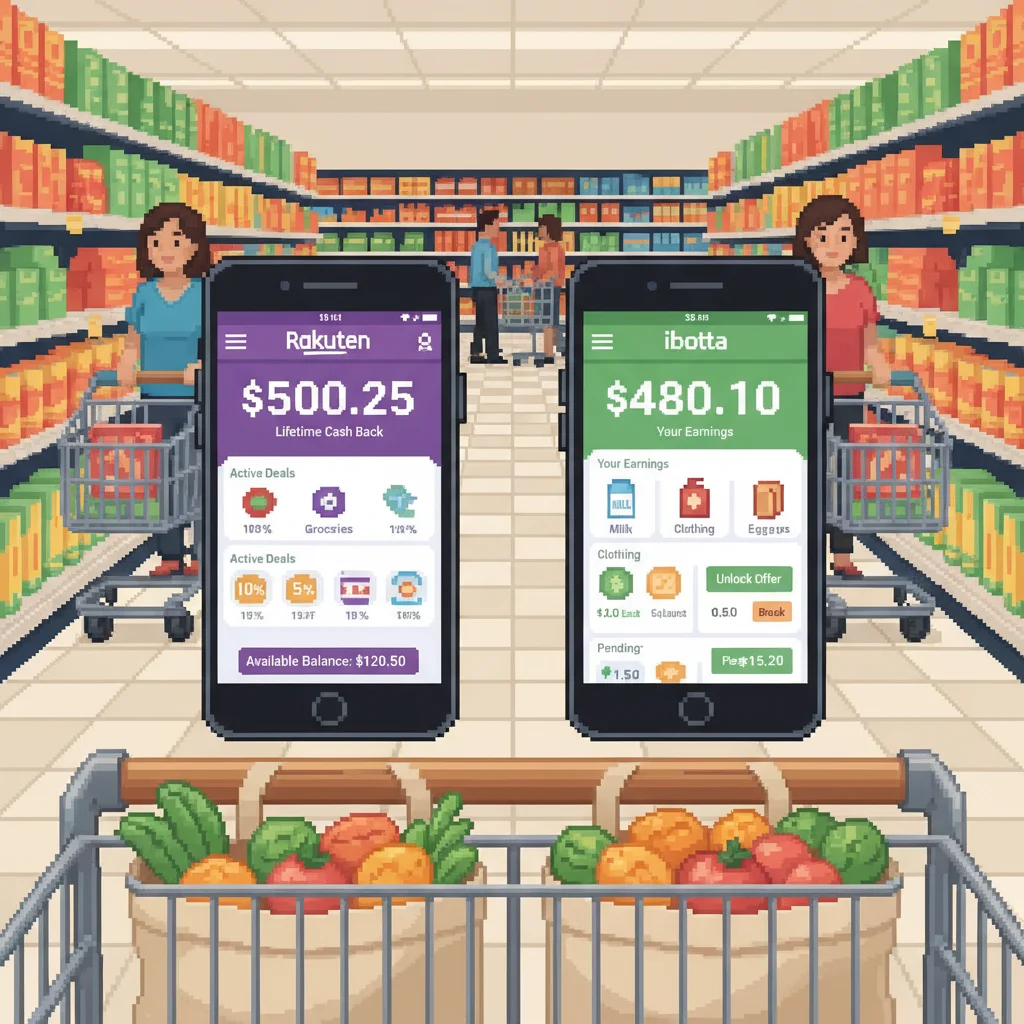
Rakuten and Ibotta are two distinct cashback leaders that reward grocery shopping differently: Rakuten earns cash back through retail partnerships and automated tracking, while Ibotta requires receipt uploads for verification. Which saves you more depends entirely on your store choices, purchase frequency, and willingness to scan.
Deciding between Rakuten versus Ibotta: which cashback app saves more on groceries this month isn’t straightforward because both platforms excel in different ways. If you shop at major chains, use online ordering, or prefer passive rewards, Rakuten’s ecosystem might suit you better. If you’re detail-oriented, shop at diverse retailers, and want to capture every eligible purchase, Ibotta’s receipt-based model could yield higher returns. This guide breaks down the real earnings potential, feature differences, and practical scenarios to help you choose or use both strategically.
How Rakuten and Ibotta earn you cashback
Rakuten operates through merchant partnerships. When you shop at participating retailers—both in-store and online—Rakuten tracks your purchase and credits a percentage back to your account. The app integrates with your payment method or uses browser extensions to auto-apply at checkout. There’s no receipt submission needed; the reward posts automatically within days.
Ibotta works on a receipt-submission model. You scan or photograph your grocery receipt in the app, match it to available offers, and submit for verification. Ibotta then confirms your purchases and deposits cash back into your account. This method requires more active participation but captures promotions that Rakuten’s merchant network might miss.
The operational difference shapes earning potential. Rakuten rewards are predictable and passive—you get X% back on Y purchase. Ibotta offers are unpredictable but often higher—individual product discounts or category bonuses that can vary weekly. Neither approach is inherently superior; they serve different shopping behaviors and preferences.
Reward rates and grocery category performance
Rakuten’s grocery cashback rates vary by retailer partnership and season. Major supermarket chains like Kroger, Safeway, and Amazon Fresh typically offer 1% to 2% back, though Rakuten occasionally runs promotional periods with rates up to 5% or higher for specific retailers. Specialty grocers, ethnic markets, and local shops often lack Rakuten partnerships, leaving those purchases uncovered.
Ibotta doesn’t publicize a single rate because it doesn’t work that way. Instead, it offers individual item discounts ranging from 10 cents to several dollars per product, category-wide bonuses (such as “earn $5 when you spend $10 on dairy”), and weekly rotating deals. A single grocery haul might yield $3 to $10 in Ibotta cash depending on what you buy and which offers align with your cart.
Rakuten’s typical grocery rewards structure
- Supermarket chains (Kroger, Safeway, Albertsons): 1–2% base, up to 5% during promotions
- Amazon Fresh, Whole Foods: 2–3% for members
- Online delivery (Instacart, DoorDash Dash Pass): 1–2% on eligible orders
- Local and independent grocers: Usually no coverage
Ibotta’s earnings range
- Per-item rebates: $0.10 to $3.00 per product
- Category bonuses: $2 to $10 for meeting spending thresholds
- Weekly rotating deals: Vary by location and app updates
- Network rewards: Earn additional cash for referrals and app milestones
In real-world scenarios, a shopper spending $150 weekly at a Rakuten-integrated supermarket earns roughly $2.25 to $7.50 per trip (1.5% to 5% rate range). The same shopper on Ibotta might earn $3 to $12 per trip by matching available offers, though this fluctuates heavily based on offer availability and product selection.
Ease of use and time investment
Rakuten’s friction is minimal. Download the app, link your payment method or browser extension, and shop normally. Rewards post automatically within 3 to 7 days. For people who prioritize convenience and minimal effort, this passive approach is attractive. The trade-off is that you’re locked into Rakuten’s merchant network, and you can’t capture deals outside that ecosystem.
Ibotta demands more engagement. You must remember to scan or photograph each receipt, manually find and match applicable offers, and submit before expiration (usually 14 days). Users report spending 5 to 15 minutes per shop session to maximize Ibotta earnings. For bargain hunters and detail-oriented shoppers, this investment feels worthwhile. For time-starved individuals, it’s friction that outweighs the reward.
User experience comparison
- Rakuten: Passive earning, no manual steps, rewards auto-post, best for convenience seekers
- Ibotta: Active earning, manual submission required, requires planning and product knowledge, best for optimization enthusiasts
- Learning curve: Rakuten immediate; Ibotta 2–3 weeks to understand offer matching
- Retention risk: Rakuten high (users forget it’s active); Ibotta lower (users stop scanning if offer density drops)
A meaningful consideration: Rakuten’s app is clean and visual, making it easy to browse merchant partners and plan shopping. Ibotta’s interface is dense with weekly offer updates, requiring regular checking to avoid missing time-limited deals. For users with attention to detail, Ibotta’s complexity is engaging. For casual users, it feels overwhelming.
Store coverage and geographic variability
Rakuten’s merchant network spans major national chains and hundreds of regional retailers. Coverage is strong in urban and suburban areas where national supermarket chains dominate. Rural and underserved areas often lack partner stores, limiting earning potential for those shoppers.
Ibotta’s coverage is more democratic but uneven. It operates via receipt submission, so theoretically any grocery retailer works—including local markets, ethnic grocers, and independent chains. However, offer availability varies by location and store. A Whole Foods in San Francisco might have 200+ active offers, while a smaller market in rural Montana might have 50. Ibotta’s data suggests coverage is densest in metropolitan areas with the highest population density.
For Rakuten versus Ibotta: which cashback app saves more on groceries this month, geography is decisive. Urban shoppers with chain-store proximity benefit from Rakuten’s passive approach and reliable partners. Rural or location-diverse shoppers who visit multiple independent grocers see better results with Ibotta’s receipt-based flexibility.
Bonus structures and promotional opportunities
Rakuten runs seasonal bonuses: higher cashback percentages during back-to-school, holidays, and clearance events. New users typically receive a sign-up bonus ($10 to $40) and are invited to refer friends for additional credits. These bonuses are advertised monthly and create predictable earning spikes.
Ibotta’s bonus structure includes referral rewards (both referrer and new user earn $5 to $10), mission completions (earn points for specific actions like reviewing receipts), and partnerships with brands for exclusive coupons. Ibotta also runs seasonal campaigns tied to holidays or grocery trends.
A critical difference: Rakuten bonuses accumulate easily but are capped and promotional. Ibotta’s individual offer density is unlimited—if an offer exists for every item in your cart one week, the next week it might drop to 20% of items. New users often experience a “honeymoon phase” with both apps where offers or rates feel more generous, then normalize once engagement stabilizes.
Security, data privacy, and account reliability
Rakuten is owned by a publicly traded Japanese company and maintains transparent privacy policies. It requires linking a payment method or using its browser extension, which some users view with caution. The app has solid security ratings and a track record of reliable payouts, though occasional glitches with merchant tracking occur (typical of any partnership-based system).
Ibotta is privately held and focuses on receipt-based verification, which some users trust more than algorithmic tracking. However, Ibotta requires camera access and photo uploads, raising privacy considerations. Both apps comply with data protection regulations, but users should review their privacy policies independently if concerned.
Payout reliability is strong with both. Rakuten deposits to bank account or PayPal; Ibotta transfers to card or PayPal. Minimum thresholds are low (often $5 to $20), and both process withdrawals within 1 to 3 business days. Disputes are handled through in-app support, and both have reasonable resolution records.
Real-world earnings scenarios
Imagine a household spending $150 weekly on groceries at a Kroger in a major U.S. city. On Rakuten, assuming a consistent 2% rate, they’d earn $3 per shop, or roughly $156 annually. If Rakuten runs a 5% promotional month, that single month yields $30.
On Ibotta, the same household might earn $4 to $8 weekly depending on offer alignment. A conservative estimate is $5 per trip, yielding $260 annually. If they optimize by timing purchases around bonus offers and category multipliers, earnings could reach $400 to $500 per year. However, this requires discipline and active engagement.
Now imagine a household that shops at four different stores monthly: a national chain, a warehouse club, a local Hispanic market, and a health-food cooperative. Rakuten covers only the national chain and warehouse club, yielding roughly $60 to $80 annually. Ibotta covers all four via receipt submission, potentially earning $300 to $400 annually if offers are available at each location.
The data reveals a pattern: passive Rakuten users earn modest, predictable returns. Active Ibotta users earn higher returns but only if shopping frequency and offer availability align. Hybrid users—those employing both apps—maximize earnings by using Rakuten passively at integrated retailers and Ibotta actively everywhere else.
| Factor | Rakuten | Ibotta |
|---|---|---|
| Earning model | Automatic (percentage-based) | Manual (receipt submission) |
| Time investment | Minimal (passive) | Moderate (5–15 min/shop) |
| Typical annual earnings | $150–$250 (base spending) | $260–$500 (engaged users) |
| Store flexibility | National chains only | Any retailer (receipt-based) |
Frequently asked questions about Rakuten versus Ibotta cashback apps
Yes. Many users employ both apps strategically: Rakuten passively at integrated national chains, and Ibotta actively everywhere else. This dual approach captures the strengths of each platform—Rakuten’s convenience and Ibotta’s flexibility—potentially earning 30% to 50% more than using either alone.
Rakuten deposits rewards within 3–7 days of purchase. Ibotta posts funds 48 hours after receipt approval. Both allow withdrawal to bank account or PayPal once minimum thresholds are met (typically $5 to $20). Cash-out processing takes 1–3 business days.
Families spending $200+ weekly should prioritize Ibotta if they’re detail-oriented. Active Ibotta users leverage category bonuses and item multipliers to maximize savings on bulk purchases. Rakuten suits families shopping consistently at one or two partnered chains. Hybrid use optimizes for both.
Rakuten rewards don’t expire, but the app account closes after 12 months of inactivity. Ibotta offers expire after 14 days of posting, though earned cash back is permanent. Both require minimum thresholds before withdrawal ($5–$20 typically), but casual users reach these easily within weeks.
Cashback is not taxable income by IRS standards; it’s treated as a discount or rebate. Both apps charge no fees for earning or cashing out. However, if you link a payment method, verify your bank doesn’t charge ACH transfer fees. Tax treatment can vary by jurisdiction, so consult a tax professional if uncertain.
The bottom line
Rakuten versus Ibotta: which cashback app saves more on groceries this month depends on your shopping patterns, store preferences, and tolerance for active engagement. Rakuten excels for convenience-first shoppers at major chains; Ibotta rewards engaged users who shop diversely. Neither app alone maximizes savings—pairing both strategically captures passive rewards at large retailers while leveraging Ibotta’s per-item flexibility everywhere else. Start with your primary grocery store and its Rakuten partnership availability. If coverage is strong, add Rakuten for passive earnings. Then, add Ibotta to capture offers at secondary stores or specialty retailers. Track your monthly earnings from each app over three months to determine which delivers better real-world value for your household.
